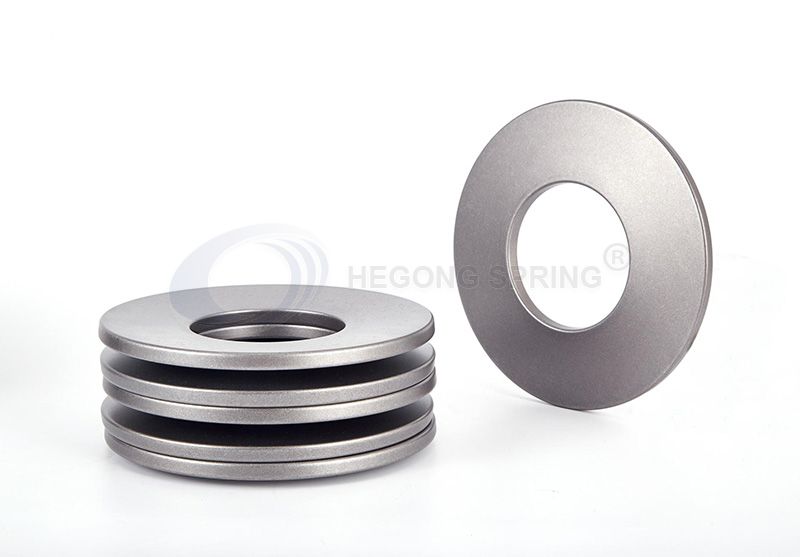
Disc springs used in valves and pressure-control equipment operate under sustained preload, repeated cycling, temperature changes and process-media exposure. When their load–deflection performance begins to deteriorate, the first warning may be unstable sealing, leakage or inconsistent operation rather than a visibly broken spring.
For maintenance teams, valve manufacturers and replacement-parts buyers, identifying preload loss early can prevent sealing problems from developing into valve or pressure-system failures. Inspection should therefore consider the spring’s dimensions, surface condition, stack arrangement and remaining load capacity.
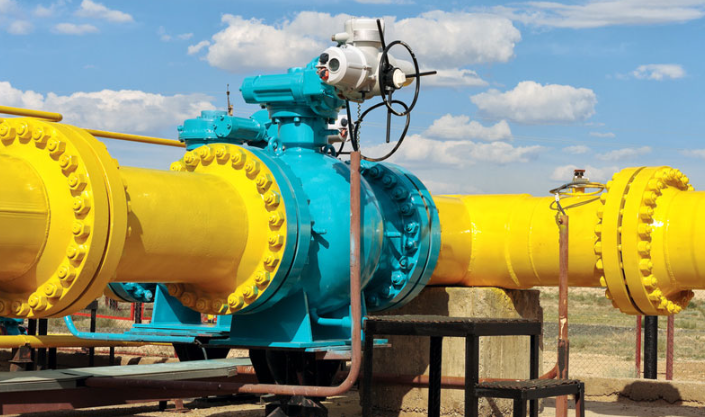
A disc spring converts controlled axial deflection into a defined spring force. In valve assemblies, this force may be used to maintain seat contact pressure, compensate for dimensional variation, support stem sealing or provide the closing force required by a pressure-control mechanism.
In pressure-relief or control-valve designs that incorporate disc springs, the spring assembly helps keep the valve closed below its specified operating threshold. When the medium pressure produces sufficient opposing force, the spring deflects and permits the valve to open. As the system pressure falls, the remaining spring force helps return the valve to its closed position.
The spring must provide sufficient force throughout its specified working travel. A spring with inadequate preload may allow leakage or inconsistent closing. Excessive preload may increase operating resistance, overload the sealing material or restrict valve movement.
Properly designed custom disc springs for valves must therefore match the available installation space, required load, working deflection, operating temperature and process medium.
Disc springs may provide the contact pressure needed to keep a valve seat closed and sealed. If the spring undergoes permanent deformation or loses force, the sealing surfaces may no longer receive sufficient pressure.
Possible symptoms include:
Leakage below the expected opening pressure
Unstable closing or reseating
Increased adjustment frequency
Inconsistent operation between repeated cycles
Reduced sealing performance after temperature changes
The spring should not automatically be identified as the only cause of these problems. Valve-seat condition, alignment, guide components, process contamination and actuator performance should also be inspected.
Disc spring stacks may be installed around a valve stem or gland assembly to maintain pressure on packing materials. The spring compensates for packing relaxation, component tolerances, thermal expansion and gradual wear.
When the available spring travel has been consumed, the assembly may no longer compensate for further packing loss. Repeated tightening may temporarily reduce leakage, but it does not correct a spring that has suffered permanent set, cracking or severe corrosion.
Some pump and process-equipment mechanical seals use disc springs to apply axial preload to the rotating and stationary seal faces. As the seal faces wear, controlled spring deflection helps maintain contact pressure.
Temperature changes may also cause components to expand or contract. A correctly selected spring can accommodate part of this movement while maintaining the required seal-face load. If the spring loses force, the seal faces may separate sufficiently to increase leakage.
A disc spring should recover within its specified dimensional tolerance after the operating load is removed. A measurable reduction in free height may indicate permanent deformation.
This can occur when the spring has been compressed beyond its design limit, exposed to excessive temperature or subjected to an unsuitable load for an extended period.
A visibly flattened spring should not be reused until its dimensions and load–deflection performance have been verified.
Small corrosion pits can act as stress concentration points. Under repeated loading, cracks may begin at these damaged areas and propagate through the spring.
Inspect the spring for:
Pitting or rust
Coating blistering or peeling
Discoloration caused by chemical attack
Scratches across loaded contact areas
Corrosion around the inner and outer edges
Applications involving acidic, alkaline, saline or humid conditions may require corrosion-resistant disc springs, stainless steel or a surface treatment selected for the actual process medium.
Repeated opening, closing or pressure cycling subjects a disc spring to alternating stress. Fatigue cracks may develop around the inner diameter, outer diameter or contact surfaces.
Any cracked spring should be removed from service. In a matched stack, the other spring elements should also be inspected because they have operated under the same load cycles and environmental conditions.
Polished contact marks are normal in some stacked arrangements. Heavy wear on only one side may indicate incorrect guidance, tilted installation, uneven seating or excessive clearance.
Misalignment changes the way force is distributed through the stack. It may cause local overloading even when the nominal compression appears correct.
A spring can lose performance without showing a large visible crack. High-temperature relaxation, small dimensional changes or material degradation may change its load at a specified deflection.
When leakage, opening force or closing repeatability changes without an obvious cause, the spring assembly should be measured and load-tested against the original specification.
Disc springs should operate within their calculated working deflection. Compressing a spring beyond its design limit can produce plastic deformation, reduce free height and permanently change its load curve.
The spring should not be forced completely flat during assembly or operation unless the approved design explicitly allows that condition.
Ordinary spring steel may lose strength or experience stress relaxation when used beyond its intended temperature range. This gradually reduces the preload available to the valve or sealing assembly.
Equipment operating at elevated temperatures may require high-temperature disc springs made from an appropriate alloy. Material selection should consider the continuous operating temperature, short-duration peak temperature, applied stress and required service life.
A general-purpose coating may provide insufficient protection against acids, alkalis, chlorides or other process chemicals. Material and surface-treatment decisions should be based on the actual medium, concentration, temperature and exposure conditions.
Valves that open and close frequently place greater fatigue demands on their disc springs. Dynamic applications require careful control of working deflection, preload, guidance, surface condition and material quality.
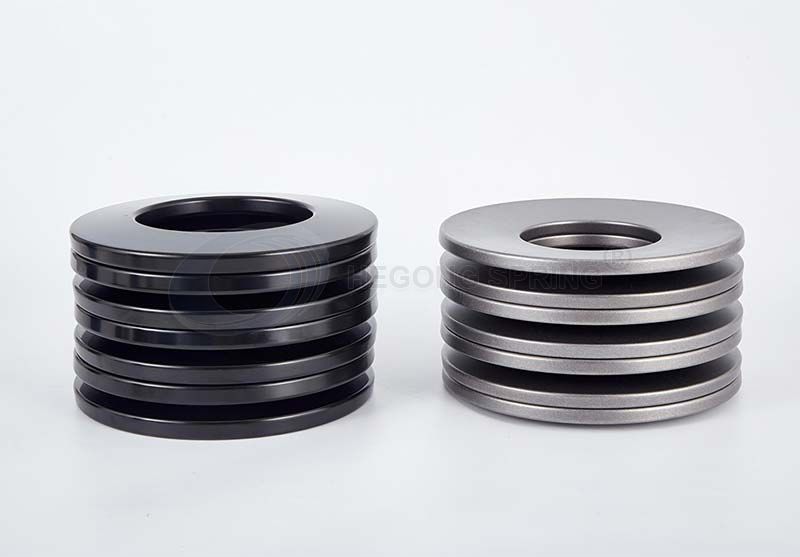
Series, parallel and combined arrangements produce different load and deflection characteristics. Reversing a spring, omitting one element or replacing only part of a matched stack may change the assembly performance.
Where the valve requires a defined force over a specific travel, replacement disc spring stacks should follow the approved drawing and stack sequence.
Before disassembly, isolate and depressurize the equipment and follow the valve manufacturer’s maintenance procedure.
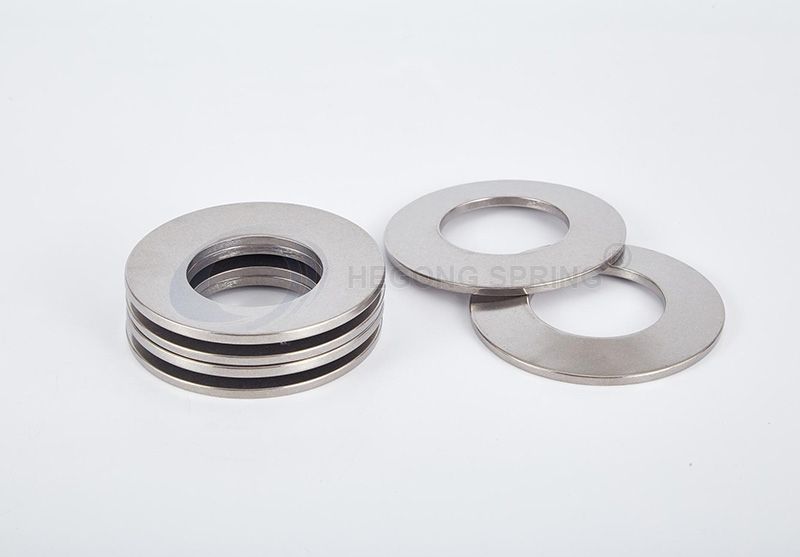
Photograph or mark the orientation of each spring before removal. Record the number of elements and whether they are arranged in series, parallel or a combined configuration.
Remove oil, scale and process residue using a method compatible with the spring material and surface treatment. A clean surface makes cracks, pitting and abnormal contact marks easier to identify.
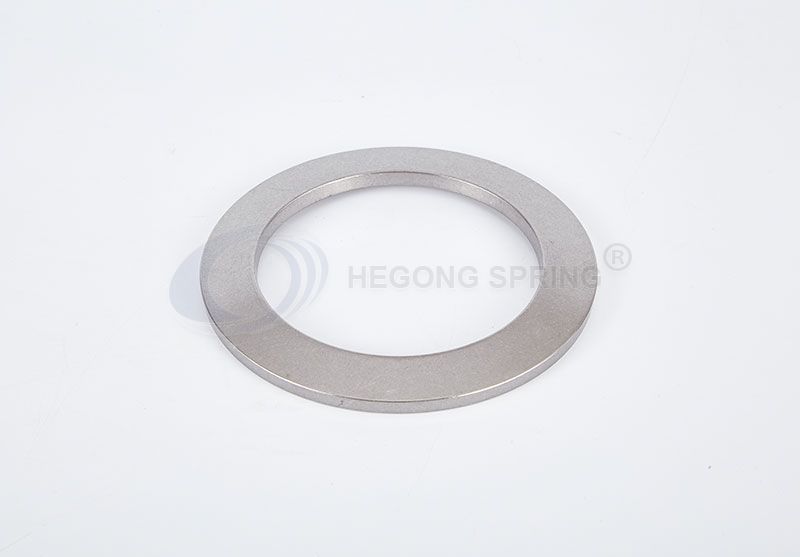
Inspect the inner diameter, outer diameter and loaded contact surfaces. Magnified inspection may be appropriate for critical equipment or springs subjected to repeated cycling.
Compare the following measurements with the original drawing or an unused reference spring:
Outside diameter
Inside diameter
Thickness
Free height
Stack height
Available working compression
Dimensional inspection helps identify permanent set, wear and incorrect replacement parts.
Examine the guide pin, sleeve, support washer and seating faces for wear, scoring, contamination or misalignment. Installing a new spring on a damaged guide surface may cause the replacement to fail prematurely.
For safety-critical or pressure-control applications, visual inspection alone may be insufficient. Testing should confirm whether the spring still produces the specified force at the required deflection.
For a broader explanation of different valve uses, see disc spring applications in different valves.
A model number or outside diameter alone is usually insufficient for selecting a replacement. To evaluate an existing spring or prepare a custom quotation, provide as much of the following information as possible:
Valve or equipment type
Function of the disc spring
Required preload
Load at the specified working deflection
Complete load–deflection curve, if available
Outside diameter
Inside diameter
Thickness
Free height
Available installation space
Stack arrangement and quantity
Continuous and maximum operating temperature
Process medium and corrosive conditions
Opening and closing frequency
Required operating cycles
Existing spring drawing
Photographs or samples of the failed spring
Estimated replacement quantity
These details allow the spring manufacturer to assess whether the existing dimensions, material, heat treatment, surface protection and stack arrangement are appropriate.
If one spring in a matched stack is cracked, permanently deformed or severely corroded, the remaining elements may have experienced the same cycles and operating conditions.
Replacing only the visibly damaged element can create differences in free height, stiffness, surface condition and remaining fatigue life. For critical applications, evaluating or replacing the complete matched stack may provide more consistent performance.
The final decision should be based on inspection results, load testing, valve requirements and the equipment manufacturer’s maintenance instructions.
Reuse depends on the application and the spring’s condition. The spring should meet dimensional requirements, show no cracks or harmful corrosion, and produce the specified force at the required deflection. Safety-critical applications may require replacement according to the equipment manufacturer’s procedure.
A disc spring should remain within its specified working deflection. Flattening the spring beyond the approved design limit can cause permanent deformation and reduce its ability to recover preload.
No. Stainless steel and protective coatings can reduce corrosion risk, but fatigue, wear, misalignment, contamination and overload can still affect performance.
Provide the existing drawing, spring dimensions, stack arrangement, required load and deflection, working temperature, process medium and estimated purchase quantity. A failed sample or clear assembly photographs can help when the original drawing is unavailable.
For a replacement assessment or custom quotation, send the existing spring drawing, dimensions, stack arrangement, required load and deflection, operating temperature, process medium and estimated quantity to HEGONG SPRING ®. Our team can review the application and recommend an appropriate material, surface treatment and spring configuration.