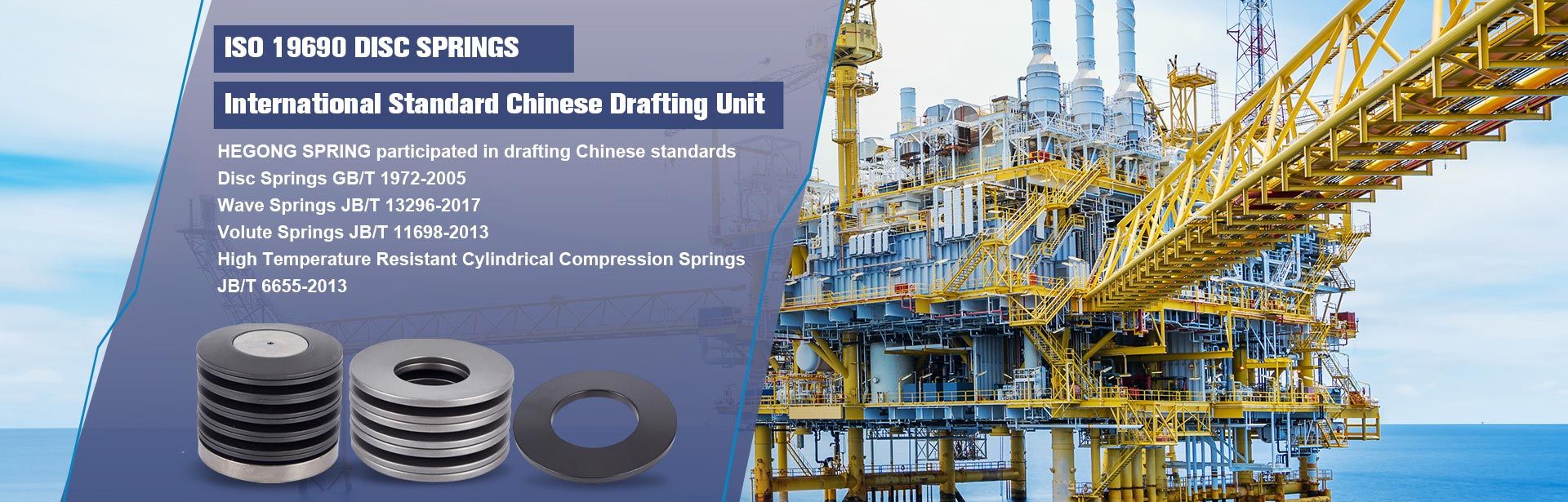
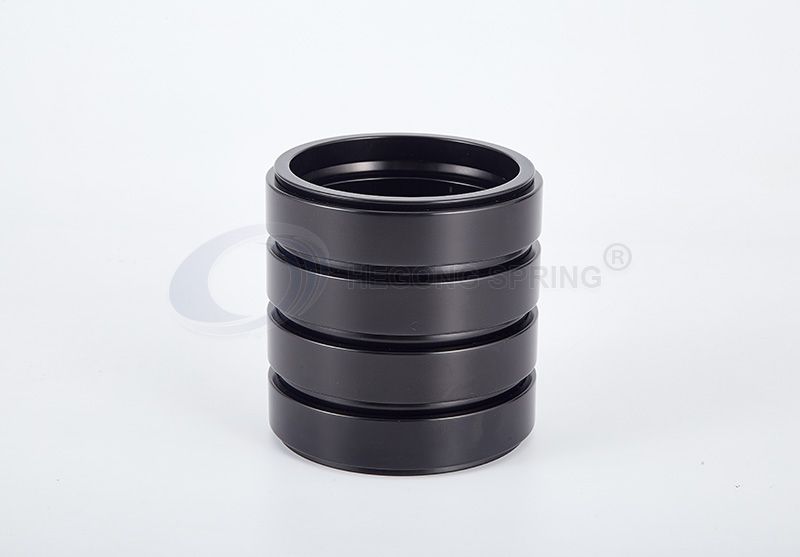
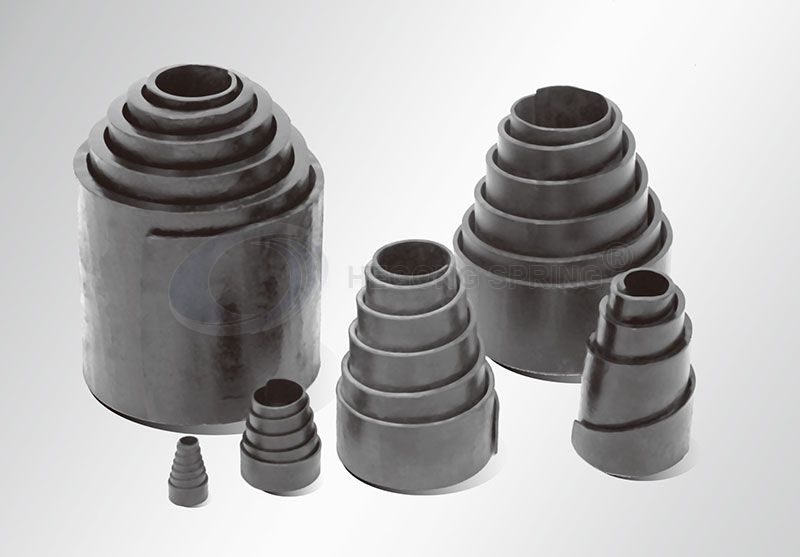
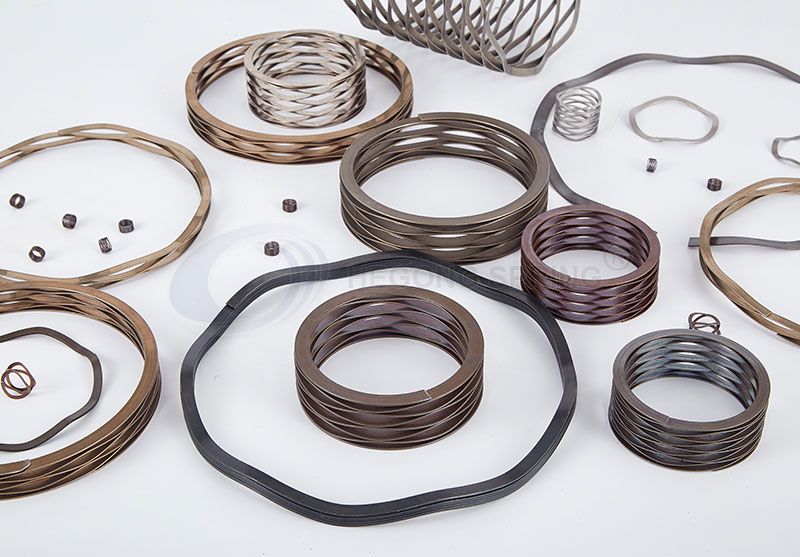
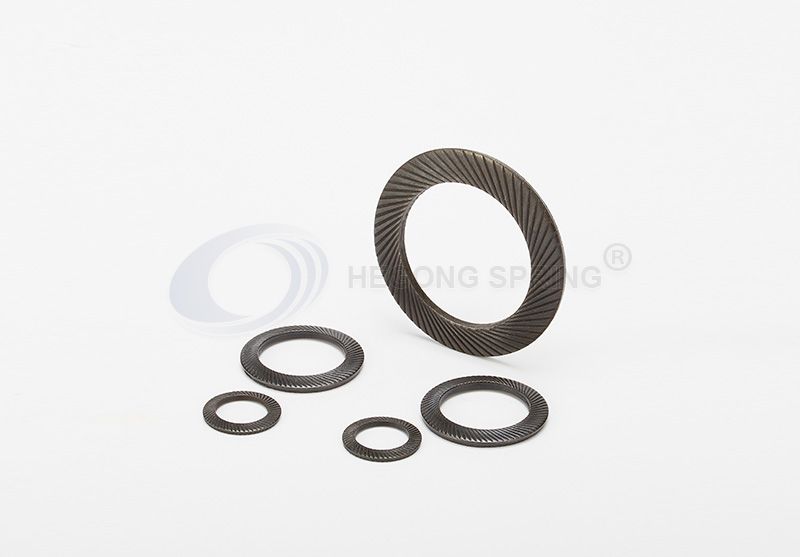
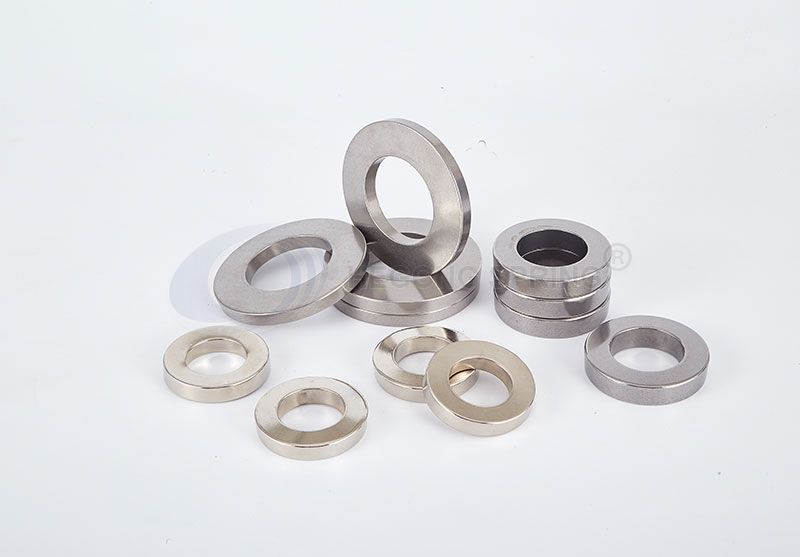
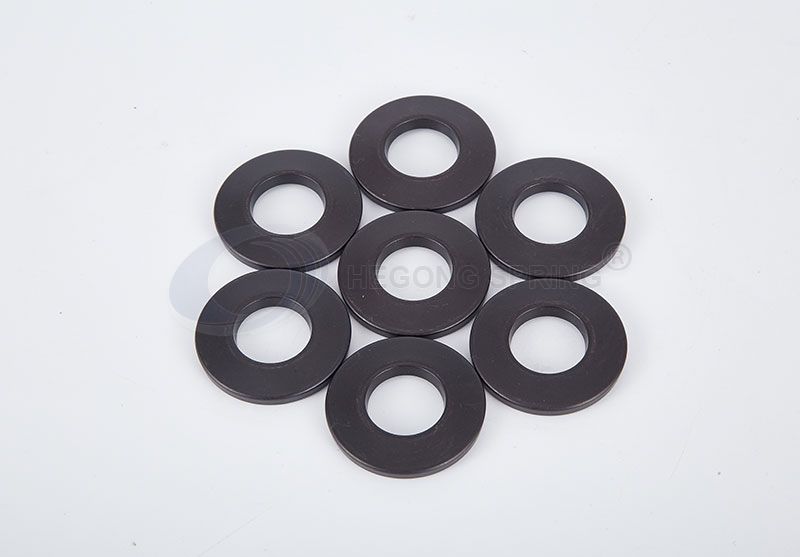
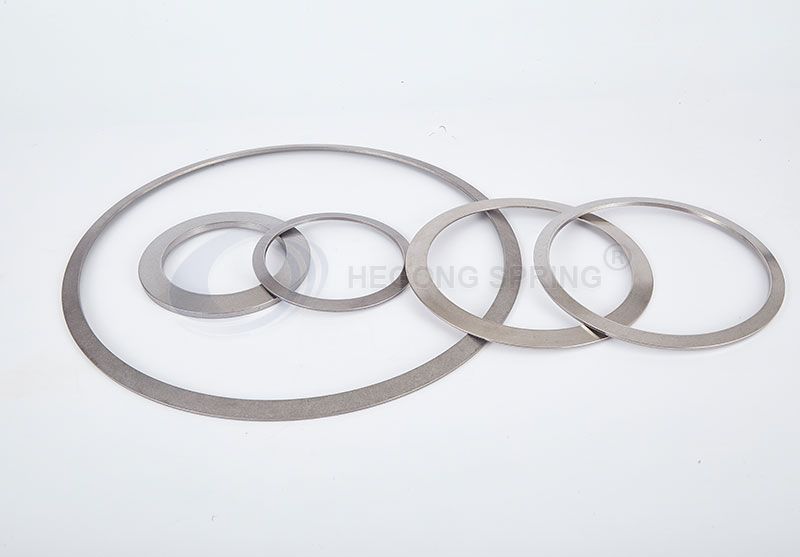
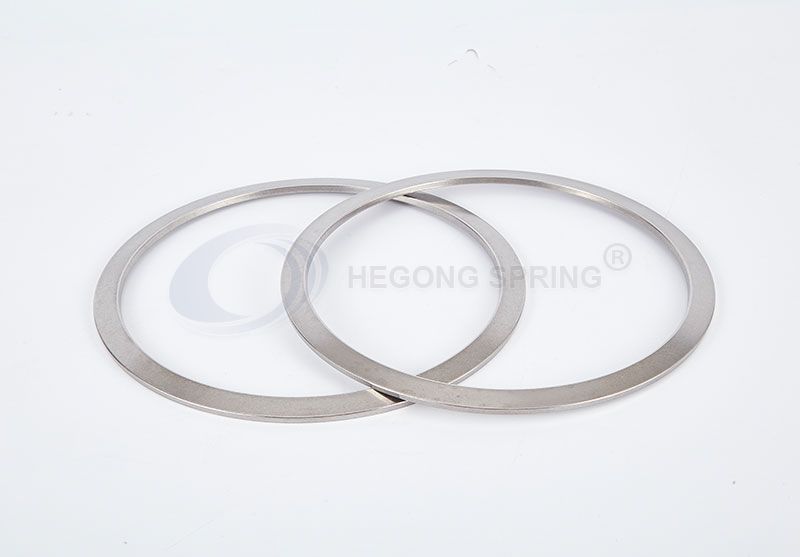
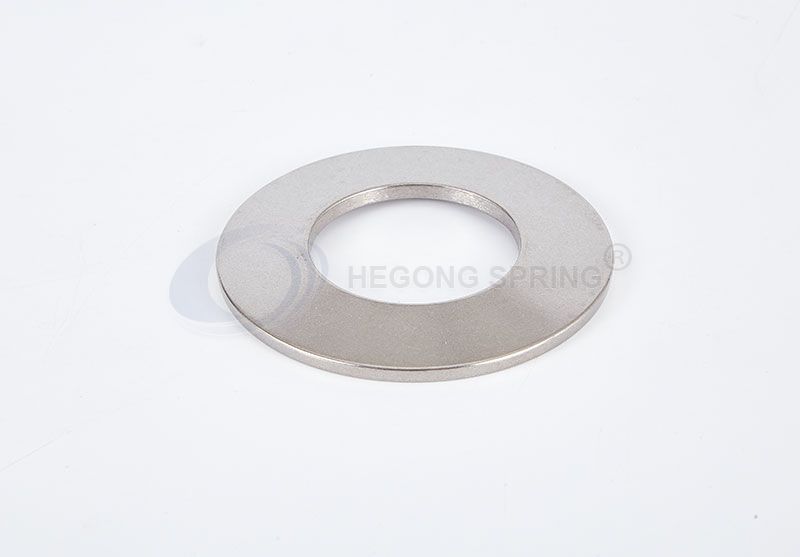
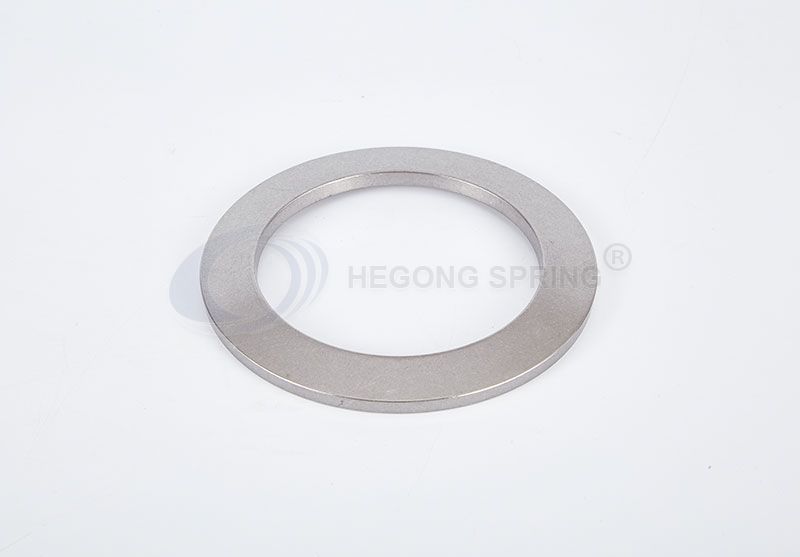
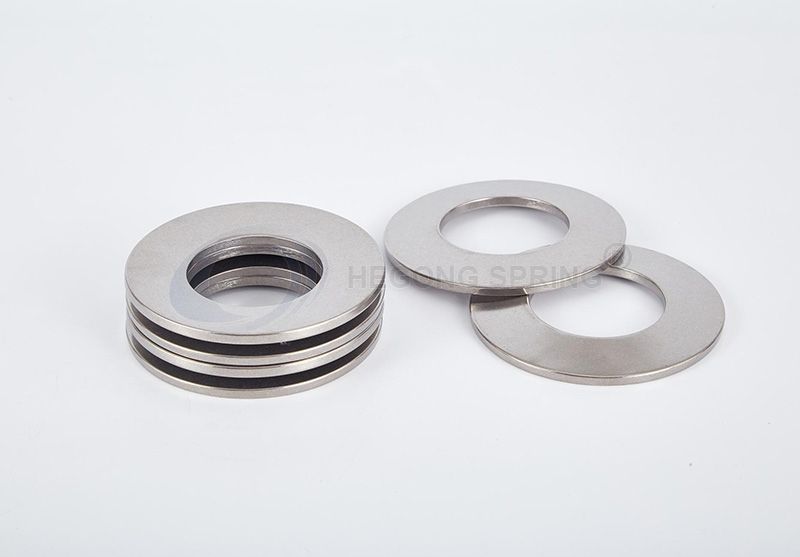
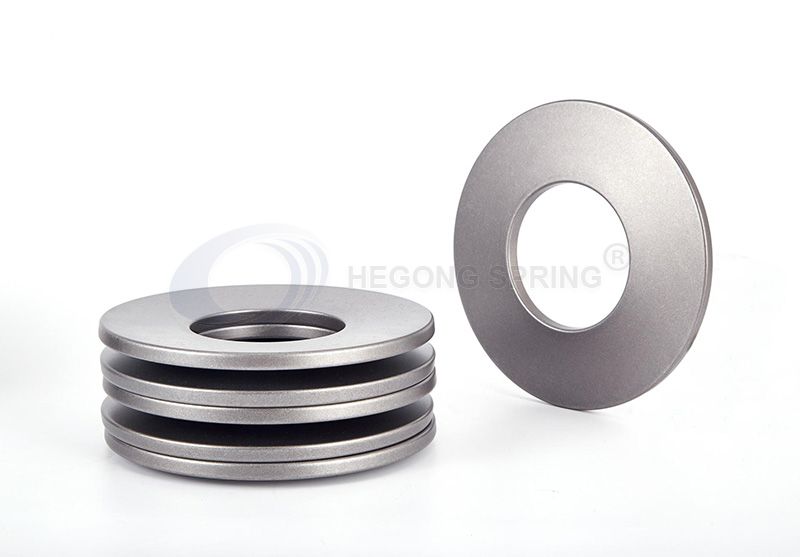
A Belleville spring, also known as a disc spring, is a conically shaped spring designed to generate axial force when compressed. Its compact geometry allows it to support relatively high loads with short deflection, making it useful where installation space is limited.
Belleville springs can be used individually or arranged in series, parallel or combined stacks to achieve different load and deflection characteristics. They are widely used for preload, force compensation, shock absorption and controlled axial movement in industrial equipment.
If you are selecting springs for a new or existing design, explore our Belleville springs or send your load, deflection and installation requirements for engineering evaluation.
A Belleville spring has a conical disc shape rather than the helical form of a conventional coil spring.
When an axial load is applied, the cone gradually flattens. This deformation stores elastic energy and generates a reaction force against the applied load. When the load is reduced, the spring moves back toward its original conical shape and releases the stored energy.
This simple geometry gives Belleville springs several useful characteristics:
High spring force in a compact axial space
Short and controllable deflection
Concentric axial force transmission
Adjustable load-deflection characteristics
Flexible spring characteristics through stacking
The exact spring force depends on factors such as outside diameter, inside diameter, thickness, cone height, material and working deflection.
Unlike a constant-force element, the force generated by a Belleville spring changes as the spring is compressed.
Its load-deflection behavior is strongly influenced by the relationship between the initial cone height and material thickness, often expressed as the h₀/t ratio.
By changing spring geometry, engineers can obtain different load-deflection characteristics depending on the application.
This allows Belleville springs to be designed for requirements such as:
High load with short movement
Controlled preload
Compensation for dimensional changes
Shock or vibration absorption
Specific force characteristics over a defined working range
For standard dimensional and load data, see our DIN 2093 Belleville disc springs.
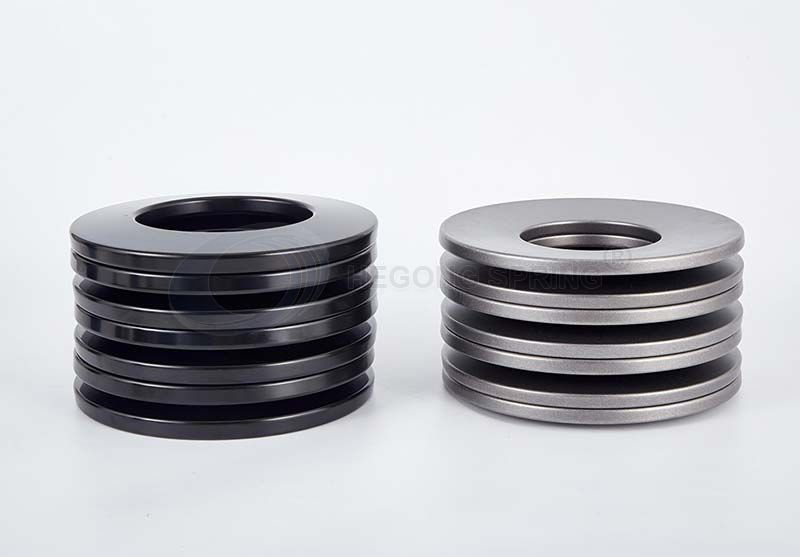
One of the main advantages of Belleville springs is that multiple discs can be combined to modify the total spring characteristics.
In a series arrangement, adjacent disc springs face opposite directions.
Series stacking increases the total available deflection while the load capacity remains approximately that of a single spring, subject to friction and actual stack design.
This arrangement is suitable when greater spring travel is required.
In a parallel arrangement, multiple disc springs are nested in the same direction.
Parallel stacking increases the available load capacity, while the deflection remains approximately that of a single spring.
This is useful where a higher spring force is required within limited axial travel.
Series and parallel groups can be combined when an application requires both increased load and increased deflection.
The final arrangement should be calculated according to the required force, movement, available space and number of cycles.
For more information, see our disc spring stacks.
Belleville springs are commonly selected where high axial force, controlled movement or preload must be achieved within a compact installation space.
Typical applications include:
| Application | Function of the Belleville Spring |
|---|---|
| Industrial valves | Maintain preload and sealing force |
| Ball bearings | Apply controlled axial preload and compensate for movement |
| Clutches and brakes | Provide controlled axial force |
| Heavy machinery | Absorb shock and provide high-force compensation |
| Petrochemical equipment | Maintain spring force under demanding service conditions |
| Power equipment | Provide preload and compensate for dimensional changes |
| Machine tools | Maintain positioning force within compact assemblies |
| Bolted joints | Help maintain clamping force under changing conditions |
The correct spring design depends on the actual load, deflection, temperature, material and service environment rather than the industry alone.
Belleville springs and coil springs both provide elastic force, but their geometries make them suitable for different conditions.
Belleville springs are particularly useful when:
Axial installation space is limited
Relatively high spring force is required
Only short deflection is needed
Load characteristics must be adjusted through stacking
A compact annular spring is preferred around a shaft or bolt
Preload needs to be maintained despite dimensional changes
A conventional coil spring may be more suitable where long travel is more important than compact axial height.
The correct choice should therefore be based on load, movement and available installation space rather than spring type alone.
The conical disc geometry allows Belleville springs to generate substantial axial force without requiring the installation height of many conventional spring designs.
Series, parallel and combined stacking arrangements allow engineers to adjust the spring system according to required force and movement.
Their annular shape makes Belleville springs particularly suitable for shafts, bearings, valves, bolted assemblies and other compact mechanical systems.
Belleville springs can maintain preload while accommodating limited dimensional changes caused by tolerances, thermal expansion or component movement.
Materials and surface treatments can be selected according to load, fatigue, temperature and corrosion requirements.
Selecting a Belleville spring should start with the required load and deflection, not simply the outside diameter.
For initial selection, determine the following parameters:
Outside diameter (OD)
Inside diameter (ID)
Material thickness
Available installation height
Required spring force
Required working deflection
Operating temperature
Corrosion or environmental conditions
Static or dynamic loading
Expected number of cycles
Required quantity
If several springs will be stacked, the arrangement and guiding method should also be considered.
For standard applications, a DIN 2093 spring may provide a suitable starting point. Special applications may require customized dimensions, materials or load characteristics.
Standard springs are suitable when established dimensions and load characteristics meet the assembly requirements.
HEGONG provides DIN 2093 Belleville disc springs with dimensional and load data for engineering selection.
A custom design may be appropriate when the application requires:
Non-standard OD or ID
Special load-deflection characteristics
Restricted installation dimensions
Special materials
High or low operating temperatures
Corrosive service conditions
Specific fatigue-life requirements
For a faster evaluation, provide your drawing together with the required load, working deflection and operating conditions.
Material selection influences spring strength, fatigue resistance, temperature capability and corrosion resistance.
The correct choice depends on the service environment.
For example, different applications may require:
Spring steels for general industrial use
Stainless steels for increased corrosion resistance
High-temperature alloys for demanding thermal environments
Special materials where corrosion, temperature or fatigue requirements exceed standard conditions
You can review our material selection guide when evaluating materials for a specific application.
In assemblies containing multiple individual disc springs, damaged or fatigued discs can often be inspected and replaced individually rather than replacing an entirely different spring mechanism.
However, replacement should not be based only on visual appearance.
If one spring in a stack has failed, it is also important to investigate:
Excessive working deflection
Incorrect stack arrangement
Overload
Poor guiding
Friction
Corrosion
Temperature
Fatigue cycles
Repeated spring failure usually indicates that the operating condition or spring selection should be reviewed.
Yes. The term Belleville spring commonly refers to a conically shaped disc spring that produces axial force when compressed. They are also sometimes called Belleville disc springs.
When axial load is applied, the conical disc flattens and stores elastic energy. The spring's resistance to this deformation produces axial spring force.
Yes. Belleville springs can be arranged in series, parallel or combined configurations to modify total load and deflection.
Series stacking primarily increases available deflection. Parallel stacking primarily increases load capacity. Combined arrangements can be designed to increase both.
The most important information includes OD, ID, available height, required load, working deflection, temperature, environment and expected service cycles.
They can be used under static or dynamic loading when spring design, stress level, material, manufacturing quality and working deflection are appropriate for the required fatigue life.
Understanding how a Belleville spring works is only the first step. The correct spring must match the required load, deflection, installation space, material, temperature and expected service life.
Explore our complete Belleville spring range for standard and application-specific solutions.
If you already have a drawing or technical requirements, send us your load and deflection requirements for engineering review and quotation.